
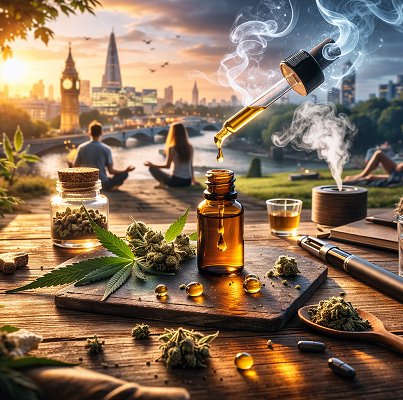
Microdosing THC: A Growing Trend Among UK Consumers
The wellness world has embraced microdosing in a big way. From psilocybin to nootropics, the idea of consuming sub-perceptual amounts of a substance to achieve functional benefits — without the full psychoactive experience — has captured the imagination of health-conscious consumers worldwide. Now, THC microdosing is quietly becoming one of the most talked-about trends in cannabis culture, and UK consumers are paying close attention, even as the legal landscape here remains firmly restrictive.
What Is THC Microdosing?
Microdosing THC typically means consuming between 1mg and 5mg of tetrahydrocannabinol — the primary psychoactive compound in cannabis — at a time. This is dramatically lower than a standard recreational dose, which often starts at 10mg and climbs considerably higher. The goal isn’t to get high. The goal is to access what many users describe as a subtle shift in mood, focus, and physical ease, while remaining fully functional throughout the day.
The concept draws on a broader pharmacological principle: smaller, more frequent doses can sometimes produce more consistent therapeutic effects than larger, intermittent ones. For THC, anecdotal reports — and a small but growing body of research — suggest that low doses may help with anxiety, mild pain, sleep onset, and creative focus, while higher doses can paradoxically increase anxiety and impair cognition.
Why UK Consumers Are Interested
Britain has a complicated relationship with cannabis. Recreational use remains illegal and classified under Class B of the Misuse of Drugs Act — meaning possession carries potential prison time. Yet public attitudes are evolving rapidly. Multiple surveys show majority support for decriminalisation, and the legal medical cannabis market, opened in 2018, has grown substantially year on year.
Against this backdrop, UK consumers are increasingly curious about what legal cannabis markets elsewhere have developed. Many follow American, Canadian, and Dutch cannabis culture closely. Microdosing content — tutorials, journals, Reddit threads, YouTube channels — is consumed heavily by British audiences who may not have legal access but are clearly preparing for a future where they might.
For those with legal access to medical cannabis through private UK clinics, microdosing is already a practical reality. Patients prescribed flower or oil often experiment with dosing to find the lowest effective amount, stretching their supply and minimising side effects.
How Microdosing Compares to Standard Use
Factor | Standard Dose (10mg+) | Microdose (1–5mg) |
Psychoactive effect | Noticeable to strong | Minimal to none |
Functional impairment | Likely | Unlikely |
Anxiety risk | Higher at elevated doses | Significantly lower |
Duration | 4–6 hours | 2–3 hours |
Common use case | Recreation, sleep, pain relief | Focus, mood, mild stress relief |
Tolerance buildup | Faster | Slower |
This comparison helps explain the appeal. For someone who wants the edge taken off a stressful workday without feeling altered or impaired, a microdose is a fundamentally different proposition than conventional cannabis use.
The Science Behind It
Research is still catching up with practice. A 2017 study published in Drug and Alcohol Dependence found that very low doses of THC reduced stress in participants, while moderate and high doses increased it — a finding that has since been replicated in various forms. The endocannabinoid system, which THC interacts with, appears to operate on a bidirectional curve: too little stimulation, no effect; too much, counterproductive results; just enough, potential therapeutic benefit.
UK-based researchers at universities including UCL and Imperial College London have been involved in cannabinoid research, though most focuses on CBD or clinical applications rather than recreational microdosing specifically. As legalisation conversations gain momentum, that research landscape is expected to broaden.
What the Future Looks Like
If and when the UK moves toward cannabis reform, microdosing products will almost certainly be among the first to find mainstream acceptance. They represent the most palatable entry point for a sceptical public — low risk, functional, and divorced from the stereotypes of recreational cannabis culture. Discreet formats like dissolvable strips, low-dose edibles, and precisely measured oils are already staples of legal markets in Canada and parts of the US, and British consumers have shown clear appetite for exactly this kind of refined, wellness-oriented approach.
For now, UK interest in THC microdosing is largely observational and aspirational. But it is real, it is growing, and it signals something important about how a new generation of British consumers thinks about cannabis — not as a substance to escape with, but as a tool to function better.
Stay with our cannabis blog!