
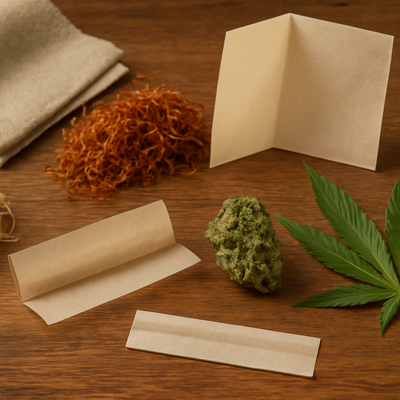
The Materials Behind Rolling Papers
Although rolling papers may appear to be just sheets, its make-up has a huge impact on the rate it burns, taste and experience when smoking so knowing the material is important for a smoker to find the paper that best enhances the cannabis rather than masking it.
Wood Pulp: The Traditional Basis
Most regular papers are wood pulp, usually made from a softwood tree such as pine or spruce. The paper goes through a bleaching process to achieve that bright white appearance using calcium carbonate or chlorine. They burn at a consistent rate, however, they do have a slight wood taste that not all smokers appreciate.
On the other hand, unbleached wood pulp papers are the natural brown with no added chemicals or bleaching, thus allowing for a cleaner taste. Since there are no bleach chemicals added, they will not produce any harshness and are popular with flavor purists who do not want anything to interfere with the strain’s terpene profile.
Rice Papers: The Premium Choice
Rice papers are at the top of the rolling hierarchy of materials. Rice papers can be made from either processed rice straw or rice flour, but are ultra-thin and burn at an extremely slow rate leaving very little ash behind. The translucent look of the rice paper is a by-product of the tightly bound fiber structure which does not permit “runs” or unevenness in the burning process.
The manufacturing process for rolling papers takes strands of rice fibers and processes them into sheets that are thinner than human hair to create pure, clean burning papers that nearly disappear when smoked, providing the cannabis flavors uninterrupted. However, they are not as easy to roll with, so not recommended for novice rollers.
Paper made from Hemp: Full Circle Material
Hemp rolling papers have a unique philosophical appeal (You’re using fibers from the cannabis plant, to smoke the cannabis). They burn well, and have strength that resists tearing as you roll. Hemp has long fibers, which is ideal for papers that need to keep their shape and strength, even when a bit damp.
Flax: The European option
There are flax papers, abundant in Europe, that burn with quite a different characteristic than the linen plant fibers from which they come. Flax papers, in particular burn cooler than wood-pulp papers, generating less harsh smoke while maintaining a uniform burn rate. The natural fibers yield just enough texture to be appreciated and endorsed by many experienced smokers.
Innovative materials
Cellulose papers; the most visible example of innovations in material stretch the boundaries of uses for materials like plant-based polymers that are fully transparent.
The corn husk papers are another innovative use of agricultural waste converted into smoking papers. Similar biodegradable options will likely appeal for environmentally friendly reasons for consumers who want to smoke sustainably.
The chemistry of rate of burn
The thickness of the paper was a primary reason for the rate of burn – thinner papers will burn faster and hotter. When calcium carbonate is applied to our papers, it acts as a fire retardant that will reduce the rate of burns as such explains why some papers will stay lit while others require repeated relighting.
Making a Material Choice
Ultimately, the material choice you make comes down to your personal wants. People who consider themselves flavor chasers often tend toward rice papers for their neutral & naturally swallow flavor. Beginners may find the wood-pulp papers a better decision to accommodate rolling mistakes for it helps make smoking a much more forgiving experience that will keep you coming back! While some are concerned about smoking these wood-pulp papers, less concern will be seen regarding the sustainability of other hemp or flax products.
In the end, ideally, the strangest rolling-paper materials simply fade into the background as you enjoy your cannabis experience without the interference of cheap materials, cheaper additives or chemicals.