
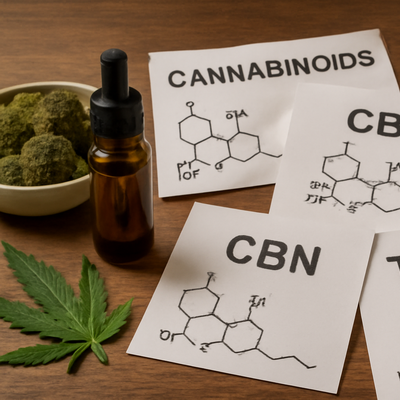
Minor Cannabinoids and Why They're Getting Popular
The cannabis industry is undergoing an evolution that transcends THC and CBD. Minor cannabinoids, little understood compounds originally dismissed due to their insignificant concentrations, are providing new innovations and market verticals that can be worth billions of dollars.
What are Minor Cannabinoids?
Minor cannabinoids arrive at less than 1% concentration in cannabis plants, in contrast to THC and CBD which can be constituted by as much as 10-25% of the overall cannabinoid content. Scientists have identified more than a hundred different cannabinoids, with dozens of those having therapeutic potential of which we are only beginning to understand.
Through similar molecular structures, minor cannabinoids produce very different effects. CBG (cannabigerol) is the “mother cannabinoid” meaning it is the predecessor to various other cannabinoids. CBN (cannabinol) is formed after THC has aged over time. Each minor cannabinoid interacts with the endocannabinoid system in a different way.
The Heavy Hitters
CBG is dubbed “the stem cell cannabinoid” because it serves as a precursor to other cannabinoids. Research indicates that CBG may provide antibacterial effects, stimulate appetite, and even have neuroprotective properties, without introducing intoxication.
CBN promotes stronger sedative effects than other non-psychoactive cannabinoids and is currently extremely popular for sleep products. While melatonin acts in a different manner, CBN acts on the same cannabinoid receptors directly in the brain, and offers different pathways to restfulness.
CBC (cannabichromene), similar to CBG and CBN, shows a lot of promise in furthering the reduction of inflammation and mood. Some early evidence indicates that CBC may promote neurogenesis or the growing of new brain cells, but there is limited understanding of CBC’s effects on human beings in a therapeutic and safe way.
Delta-8 THC offers milder versions of the psychoactive effects of traditional Delta-9 THC. Delta-8 can appeal to recreational users as being simply relaxing, rather than entirely intoxicating. The amount of legal Delta-8 THCA in hemp-derived products has increased the marketplace’s immense growth.
THCV (tetrahydrocannabivarin) works as an appetite suppressant, thus earning the label as “diet weed.” Unlike THC, THCV may block the CB1 receptors completely at low doses and may help counteract some of THC’s negative effects.
Manufacturing Obstacles and Innovations
Extracting reasonably measurable amounts of any minor cannabinoids from a natural source proves to be economically unachievable. A gram of pure CBG may require processing multiple pounds of cannabis flower, and it would take a phenomenally large amount of money if extracted using these direct methods.
Biosynthesis is the industry’s game-changing solution. Companies utilize genetically modified yeast and bacteria to biosynthesize specific cannabinoids in fermentation tanks. The process is similar to how insulin is created. Companies can produce minor cannabinoids at 95%+ purity for a cost that would be unmarketable through traditional methods.
Chemical conversion offers another path; chemical processes can convert abundant CBD into minor cannabinoids in the laboratory. The Delta-8 THC products use this process to convert CBD isolate to the desired compound.
Market Explosion and Consumer Engagement
Products with CBN for sleep aid have gained extreme popularity, with some brands charging premium prices despite the somewhat limited amount of clinical evidence to support their theories.
A few beverage companies have started to create functional drinks containing minor cannabinoids. Some of the marketed effects include energy (THCV), focus (CBG) or relaxation (CBN). These cannabinoids may prove to be an effective alternative to caffeinated or alcoholic drinks.
As research becomes more expansive and production becomes cheaper, we can expect minor cannabinoids to be as commonplace as CBD, and provide consumers with precise tools for wellness and recreational experiences that contribute positively to their needs.