
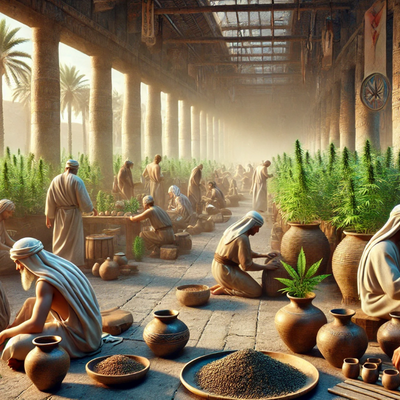
Cannabis Use in Ancient Civilizations: A Time-Travel Adventure
Evidence from biomolecular archaeology indicates that cannabis cultivation occurred around 12,000 BCE in Central Asia. That places cannabis cultivation among the earliest cultivated plants (along with wheat and other grains). The ancient Chinese had cannabis as early as 2700 BCE when Emperor Shen Nung documented cannabis in his pharmacopeia of 365 plants for, apparently, use with a range of issues, including rheumatism and confusion. As cultivators, ancient populations would recognize and understand unique attributes of the plants so as to manipulate growing conditions and develop customized cultivation techniques that they transferred along with trade routes into unknown civilizations and across distant continents.
Spiritual Ceremonies and Divine Connections
The sacred qualities associated with the use of cannabis were linked with varied cultures. In India, cannabis became especially important through its association with Lord Shiva, as written in the Atharvaveda around 1500 BCE, referred to as “bhang.” Bhang was described as a divine plant whose effect on anxiety facilitated human beings to internally appease the cosmic consciousness. Cultures developed complex preparation techniques to create bhang pastes by compressing milk and spices to consume during festivals honoring Shiva. Meanwhile, shamans living in tent-like shelters on the Scythian steppes would perform extensive rites, throwing cannabis seeds onto hot rocks, creating vapors inhaled by the attendees in closed quarters to resemble the contemporary term “hot boxing” (reported by Herodotus).
Medical Uses Across Continents
As physicians emerged within all ancient civilizations, an increasing sophistication in medicinal use of cannabis was reported. The Ebers Papyrus from ancient Egypt (circa 1700 BCE) contains extensive prescriptions for the use of cannabis in relation to inflammatory conditions, glaucoma, and hemorrhoid-related discomfort. Egyptian midwives offered cannabis preparations during labor for pain relief—a technique that took hold across Mediterranean civilizations. Cannabis was later integrated by Ayurvedic practitioners into a number of complicated herbal formulations to address sleep disorders, pain management, and digestive complaints.
The Industrial Revolution of Antiquity
Cannabis played a role beyond its medicinal and spiritual applications; it also completely altered ancient industries and technologies. In China, innovation involving hemp fibers revolutionized communication technologies with paper production—the oldest known examples of paper exist today as remnants of cannabis fibers painstakingly separated, cleaned, and processed or mended to ensure durability. For maritime civilizations, hemp cordage was strategic for naval supremacy, and the Greek and Roman fleets employed hemp ropes and sails that aggressively sought an advantageous position in the Mediterranean. The sophistication of archaeological textiles demonstrated their advanced processing of hemp that produced textiles ranging from coarse sailcloth to lavish ritual garments. Their military applications included bowstrings for which easy access to hemp provided armies equipped with hemp weapons a technological advantage in ancient wars.
Cultural Context and Regional Variations
Cannabis consumption’s social and cultural context differed greatly between civilizations. The Middle East had methods for preparing hashish by the 10th century, and the process became established practice by Sufi mystics, who incorporated these concentrated preparations into specific processes for heightened states of consciousness during contemplative practice. The Assyrians would use the term “qunubu” (meaning “way to produce smoke”) when referring to cannabis, and they too incorporated it into elaborate religious ceremonies as sacred incense during worship. Religious scholars still disagree as to whether “kaneh bosm,” mentioned in passages from the Hebrew Bible, referred to a church sacrament containing cannabis. This question illustrates how deeply woven cannabis was into religious practice spanning theological traditions.
Early civilizations developed integrated relationships with this plant that went far beyond recreational use into more comprehensive systems encompassing botany-related knowledge and learning, spiritual practice, medical application and development, and industrial invention and innovation.