
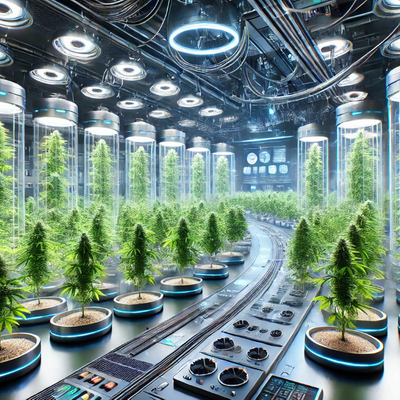
The Weed of the Future: How AI is Revolutionizing Cannabis Cultivation
Artificial intelligence has helped redefine cannabis cultivation from more art than science to science based on data. Modern growing systems are now leveraging combinations of machine learning algorithms, that monitor and adjust growing environments with an unprecedented level of precision. An environmental data set may have thousands of individual data points that are processed and are typically assessed every second by the AI growing systems. Environmental changes can include things as specific as a change in humidity, the intensity and spectrum of light, variation in CO2 levels, and soil moisture content. Some growing systems are even able to develop fully individualized growing protocols for specific cannabis genetic strains.
Predictive Analytics and Yield Optimization
Predictive analytics are enabling the capacity to improve yield prediction and yield optimization in commercial cannabis operations. Commercial cultivators are able to forecast and quantify the total biomass of a harvest quantity remarkably accurately – often to within 2-3% of actual harvest yields, weeks in advance of harvest. This means that cultivators can better manage business decisions knowing the units of supply chain management that are required to fulfill their market commitments. Better yet, AI systems can even identify the specific climate/environmental factors that lead to higher yield types of genetic strains and cultivate solely with those variables to drive productivity and performance.
Computer Vision and Plant Health Monitoring
Computer vision is changing how plant health performance is measured using automated visual representation. AI-enabled cameras continuously observe cannabis plants and catch early signs of nutrient deficiencies, pest issues, or disease before they are visible to human users. These systems identify possible problems on the basis of subtle changes in coloration of the leaf, growth habit, or the stem characteristics. The detection capabilities of these systems can identify issues that are usually identifiable by cultivators about 3-5 days earlier than human observation, which allows cultivators to minimize potential losses in crops. Some of these systems can even identify specific pathogens based solely on the distinct visual signature made by pathogens in plant tissue.
Genetic Analysis Reduces Breeding Time
With AI advances in genetic all generally compressed the time frame of cannabis breeding and strain development. Machine learning algorithms scan the entire genetic profile of thousands of cannabis varieties and identify specific combinations of genes that produce specific characteristics such as different cannabinoid levels, different terpenes profiles, or resistance to disease. This approach takes the guesswork (and generations of trial) out of breeding, and cultivators can finally predict crossbreeding outcomes, especially if there is enough phenotype repetition and clustering to identify patterns with predictable precision. The best AI breeding programs will model thousands of potential crosses virtually before making actual crosses, and cultivators only expend real plant resources when they are convinced that they can compile the most promising genetic combinations.
Resource Optimization Improves Sustainability
AI systems have drastically decreased efficiencies of resources in cannabis production through refined input uses. Many machine learning algorithms consider what the total resource consumption (water, electrical consumption, nutrients) is about what the actual plant performance is. They find opportunities for the grower to reduce input consumption while consistently producing the same level of quality. Most systems reduce water consumption by 25-40% based on traditional resource application consumption. Most systems also reduce nutrient consumption simply by using precision nutrient delivery systems.
The Revolution Is Ongoing
The revolution is ongoing as cannabis cultivation continues to separate itself from the stigma of prohibition into regulated commercial production. Artificial intelligence is redefining the cannabis industry for horticulture and how cannabis may be grown, processed, packaged, and marketed in all aspects.