
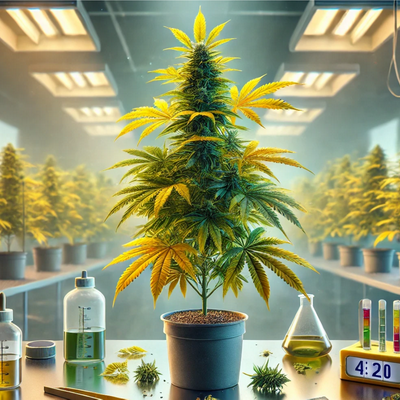
Cannabis Plant Health: Decoding the small yellow spots on cannabis leaves
Cannabis cultivation demands intricate understanding of plant physiology, with leaf discoloration serving as a critical diagnostic window into the plant’s overall health.
Physiological Mechanisms of yellow leaf tips cannabis
In cannabis plant yellow leaves aren’t a random occurrence but a sophisticated biochemical response triggered by multiple potential factors. The transformation from healthy green to yellow represents a sophisticated communication mechanism where the plant signals underlying nutritional, environmental, or physiological stress.
My cannabis plants are turning yellow: Nutrient Deficiency Dynamics
Nitrogen deficiency emerges as the primary culprit behind yellow leaf tips and overall chlorosis. As nitrogen plays a crucial role in chlorophyll production, its insufficiency directly manifests through progressive leaf yellowing. The process begins at lower leaves, gradually ascending through the plant’s structure, creating a distinctive yellowing pattern that serves as an early warning system.
Environmental Stress Indicators
Cannabis plants are remarkably sensitive environmental sensors. Yellow leaves with brown spots often indicate:
- Inconsistent watering patterns
- pH imbalances in growing medium
- Light intensity fluctuations
- Temperature extremes
Root Zone Health Correlation
Surprisingly, leaf yellowing frequently originates underground. Root system compromises – whether from overwatering, poor drainage, or pathogenic invasions – directly translate into foliar discoloration. The roots’ inability to efficiently transport nutrients creates a cascading effect manifesting as yellowing leaves.
Diagnostic Precision
Experienced cultivators distinguish between different yellowing patterns:
- Uniform yellowing suggests systemic nutrient deficiency
- Spotted yellow patterns indicate potential pathogenic intervention
- Yellowing with crisp brown edges typically signals environmental stress
Technological Intervention
Modern cannabis cultivation leverages advanced diagnostic technologies:
- Spectral leaf analysis
- Molecular nutrient profiling
- Hydroponic monitoring systems
- Real-time pH and electrical conductivity tracking
Genetic and Varietal Considerations
Different cannabis cultivars exhibit varying sensitivities to environmental stressors. Some hybrid strains demonstrate remarkable resilience, while others require meticulously controlled cultivation environments.
Holistic Plant Management
Addressing yellow leaves requires a comprehensive approach transcending simplistic nutrient supplementation. It demands understanding complex interactions between genetics, environment, and plant physiology.
Quick Diagnostic Snapshot and Practical Recommendations
- Primary yellowing causes: Nutrient deficiency, environmental stress
- Critical monitoring zones: Root system, leaf margins, overall chlorophyll distribution
- Recommended response time: Immediate intervention within 48-72 hours
For cultivators observing yellow leaves:
- Conduct comprehensive soil and tissue analysis
- Verify pH levels (ideal range 6.0-7.0)
- Assess root zone conditions
- Implement targeted nutrient interventions
- Monitor environmental parameters
Conclusion
Cannabis leaf yellowing represents a sophisticated botanical communication mechanism. Rather than viewing it as a problem, progressive cultivators understand it as valuable diagnostic information providing deep insights into plant health and growth potential.