
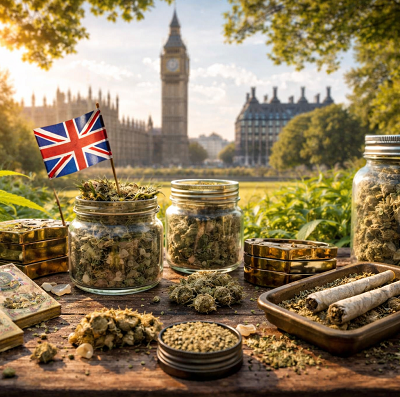
From Victorian Tinctures to Modern Medical Acceptance: A Look at 420 History in the UK
The history of cannabis in the UK has included influences from colonialism; from counterculture activism; and has slowly transitioned through the regulatory environment into the current medical acceptance. Although the “420” concept came from California, there are other events that have shaped the current situation of cannabis in the UK.
UK Cannabis Timeline – Empire, Counterculture, and Activism
Era | Key Event | Cultural Impact |
1894 | Indian Hemp Drugs Commission | A 3,000-page report concluded that moderate use was practically harmless. |
1928 | The Dangerous Drugs Act | Cannabis was officially criminalized in the UK following an international Geneva convention. |
1967 | The “Legalise Cannabis” Ad | A full-page ad in The Times signed by The Beatles and leading scientists. |
1971 | Misuse of Drugs Act | The current legal framework was established, classifying cannabis as Class B. |
2018 | Medical Legalisation | Following high-profile cases of epileptic children, medical cannabis became legal. |
Curiosities of Victorians and the "Empire" Influence
Before it was considered a “street drug,” cannabis was used as a medicine by people who lived in countries under the rule of the British Empire. Sir Robert Russell, Queen Victoria’s personal doctor, was one of the earliest advocates for using cannabis to treat menstrual cramps. During this period, cannabis tinctures were as easily found in British pharmacies as Aspirin is today. The perspective of Victorians was based on function – cannabis was a medicine first and a botanical curiosity second.
Summer of Love and The Times Advertisment - 1967
While the modern day UK activist movement may have begun with an advertisement in The Times published by “Soma,” the advertisement directly addressed an issue that had not previously been openly discussed. The advertisement read:
“The law against marijuana is immoral in principle and unworkable in practice.”
This event marked the beginning of when artists, physicians, Members of Parliament, etc., publicly questioned the legitimacy of the existing system. At this point, the discussion moved from being underground-based rebellion to public debates.
Class C (2004-2009)
For a short time, the UK relaxed their stance on cannabis and reduced it from a Class B to Class C substance. This change in classification allowed police to concentrate on harder narcotics like heroin and cocaine rather than arresting individuals for minor offenses related to possession of cannabis. However, due to increased pressure from media coverage concerning “skunk” and mental health issues surrounding use, it was eventually returned to its former designation as a Class B substance in 2009.
2018 - A Turning Point
Although there have been several important milestones throughout U.K. history since the late 1800s, there is perhaps no single date that represents a turning point quite like November 1, 2018. It was on this date that the U.K. officially legalized medical cannabis, which allows specialists to legally prescribe these types of medications.
Frequently Asked Questions Regarding Historical Context
- Was the UK ever “legal”?
Yes. Prior to 1928 there were no laws regulating the sale or consumption of cannabis although it was not used recreationally. - Why did the UK ban it in 1928?
The U.K. passed legislation banning cannabis following an international conference held in Geneva called the Second International Opium Convention. Countries such as Egypt and Turkey pressured other nations attending the conference to include cannabis among controlled substances. The U.K. supported this decision because they wanted to adhere to all international agreements they had entered into concerning controlled substances. - What is the Wootton Report?
It was a report commissioned by the U.K. government in response to growing concerns about the severity of penalties associated with possessing or consuming cannabis. The report recommended that the penalties associated with violating laws relating to cannabis should be significantly reduced.